Latest News


AI in 2026: Smarter Models, Harder Questions

Toward Quantum-Augmented Databases: New USC Study Could Turn Data Systems That Take Hours Into Minutes

USC Breakthrough Could Help Scientists Spot Disease Clusters, Fraud Networks and More

Researchers Seek to Catch Money Launderers By Building a Machine That Out-Thinks Them
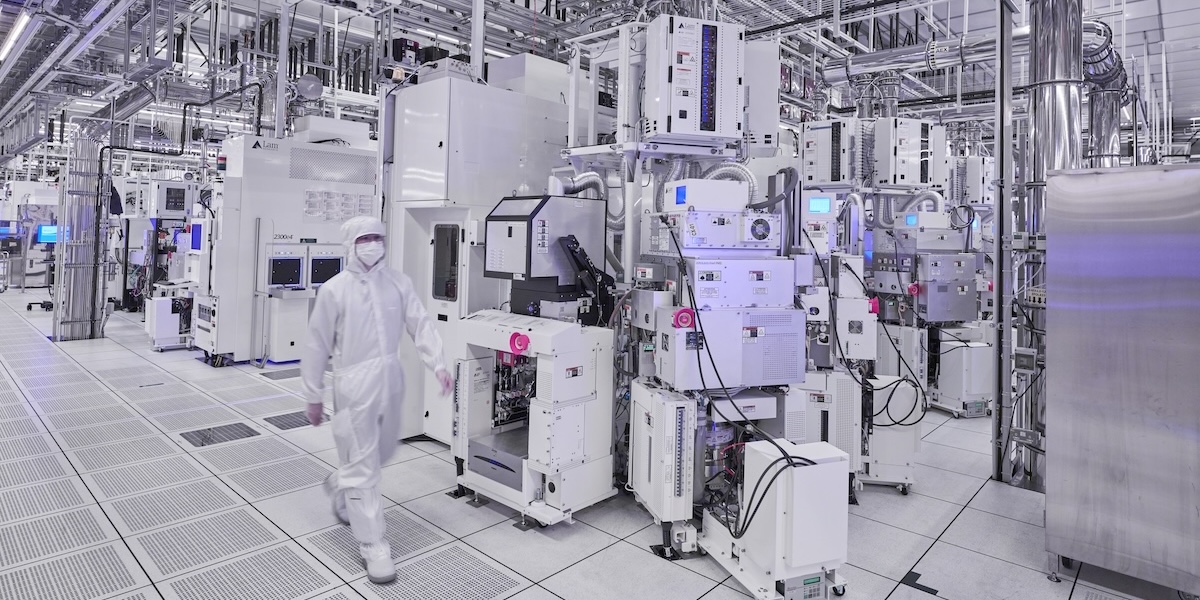
MOSIS 2.0 and GlobalFoundries Partnership: A Strategic Alliance for Semiconductor Innovation

USC Studies Aim to Advance Self-Driving Cars, Transform Robot “Brains” and Understand Workplace AI Use

What If We Could See Disinformation Coming? USC Scientists Say We Can

Unlocking the Inner Ear: Transforming How Scientists Study Hearing and Balance
Delivering the future
ISI's mission is to advance society through pioneering research and technological innovation. We cultivate an intellectually vibrant environment where researchers are empowered to imagine bold solutions to complex problems and to develop into world-class leaders. Guided by integrity, inclusion, and a commitment to excellence, we create unprecedented capabilities that harness information to transform lives.
Research & Development
Part of the University of Southern California’s Viterbi School of Engineering, ISI is a pioneer in research and development across an exceptionally wide range of advanced information processing, computer, and communications technologies.
Our broad expertise spans artificial intelligence, computational systems and technology, space engineering, informatics systems research, and networking and cybersecurity. Bridging multiple technology disciplines through both academic and industry expertise, ISI continues to shape the technologies of tomorrow.

Centers
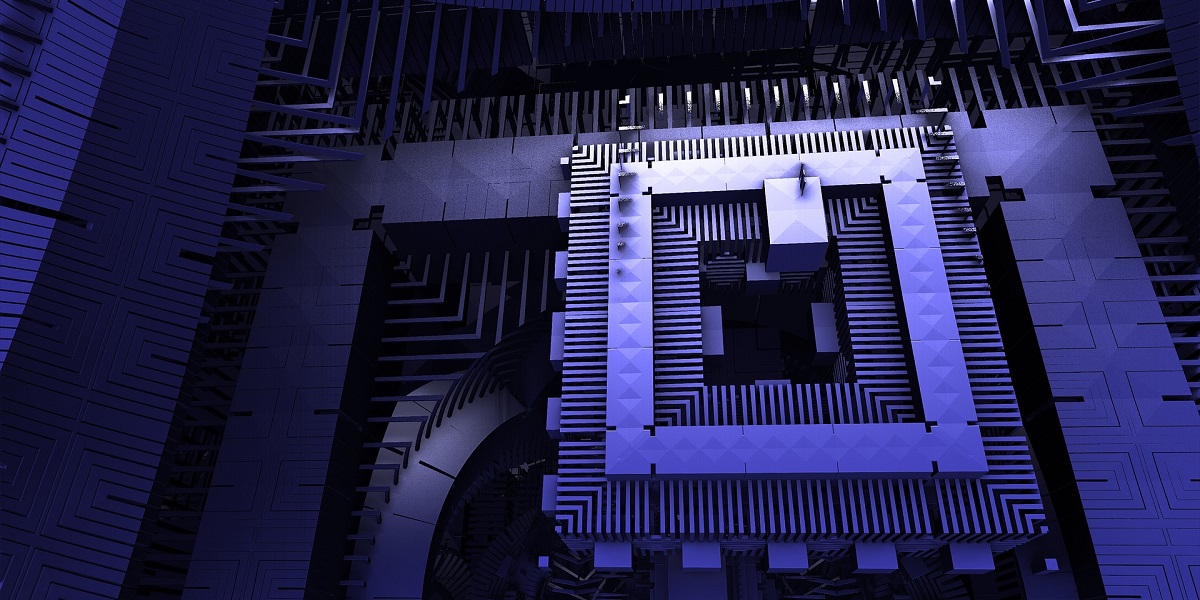
ISI Centers are internationally renowned for pioneering research in a multitude of areas and disciplines, with collaborations with Lockheed Martin, Raytheon, Northrop Grumman, and numerous other organizations. From quantum computing to global space applications, ISI Centers push forward the boundaries of innovation.
MOSIS
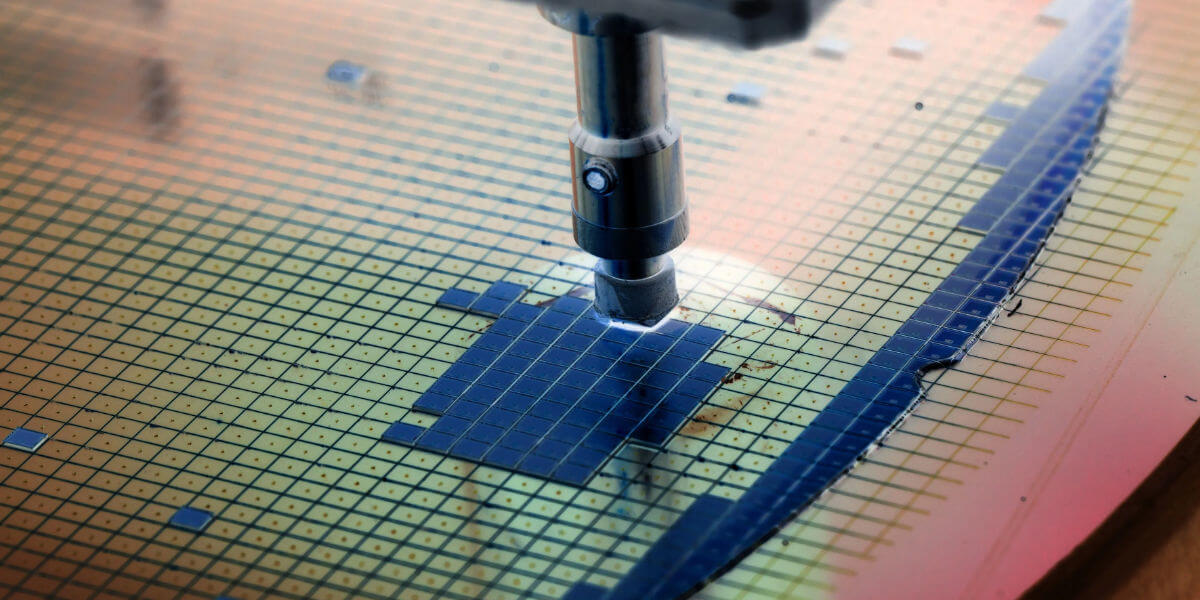
In 1981, a request from DARPA led to USC establishing The MOSIS Service at ISI — a silicon prototyping and low volume production service for custom and semicustom integrated circuits.
Over the past 40 years, The MOSIS Service has collaborated with over 50 US government laboratories and agencies, 800 domestic and foreign colleges and Universities, and more than 100 commercial companies, and continues to support the advancement of microelectronics.
Join the Future
To build upon its successes and global reach, ISI actively recruits exceptional talent. We are dedicated to investing in tomorrow’s leaders, providing numerous internship, job, and program opportunities for students, as well as unique opportunities for exceptional researchers in information sciences and related fields.
Featured Job Openings
To build upon its successes and global reach, ISI actively recruits exceptional talent. We are dedicated to investing in tomorrow’s leaders, providing numerous internship, job, and program opportunities for students, as well as unique opportunities for exceptional researchers in information sciences and related fields.
Analog Design & Layout Engineer
Marina del Rey, CA
In Office
Seeking an engineer skilled in analog/RF and digital circuit design, and physical layout. The role involves working with MOSIS 2.0 customers, supporting USC’s tape out classes, and contributing to funded research projects in the USC ECE department.
EDA Infrastructure Engineer
USC University Park Campus
In Office
Manage and support multi-vendor EDA tool flows with a focus on digital design. Oversee cloud platforms for tool access and IP repositories, providing support to internal and external users in a collaborative, cloud-based EDA ecosystem.
ASIC/FPGA Research Engineer - Digital Design
Arlington, VA
Hybrid Eligible
Perform front-end digital design of advanced ASIC or FPGA-based prototypes addressing problems of national importance while developing novel computer architectures, RTL models, and systems-on-chip.
Did you know
ISI SEMINAR SERIES
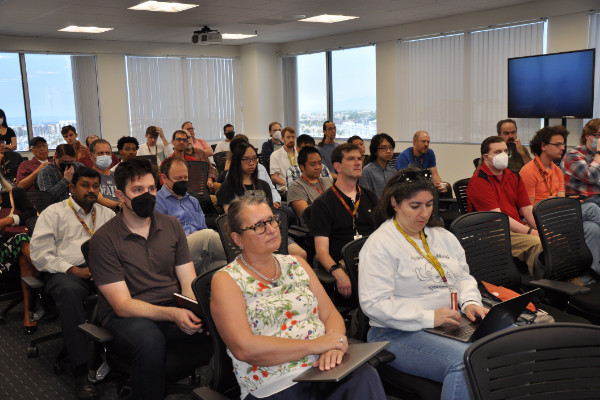
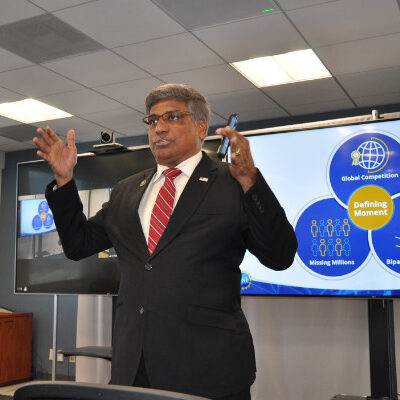
Keep up-to-date with the ISI seminar series by subscribing below.
You will have the option of subscribing to individual seminar topics.
subscribe to notificationsISI SEMINAR SERIES
Keep up-to-date with the ISI seminar series by subscribing below.
You will have the option of subscribing to individual seminar topics.
Information Sciences Institute
As a world-class institution, ISI offers a prestigious, intellectually vibrant environment, combining the best of major research universities and industry labs on both coasts.
ISI is committed to forging a better future. Please visit our careers web page to learn how you can become a part of the ISI community.

The first-ever USC Space Engineering Research Center (SERC) Open House welcomed researchers, students, industry leaders, and government partners for an inside look at the groundbreaking work happening at SERC. From lab tours and technology demonstrations to conversations with the people driving innovation, the event showcased how collaboration is advancing the future of space exploration.
SERC Director David A Barnhart, also a research professor in the USC Viterbi School of Engineering's Department of Astronautical Engineering, shared how bringing together academia, industry, and government is accelerating innovation and preparing the next generation of space leaders.
The inaugural open house highlighted SERC's growing role as a hub for cutting-edge research, workforce development, and partnerships that will help shape the future of the space economy.
Read the full story: https://lnkd.in/g3DRpMCY
Established at the USC Information Sciences Institute in 1981, MOSIS has enabled generations of researchers, startups, and industry partners to prototype groundbreaking semiconductor technologies. Today, MOSIS 2.0 continues that mission as a cornerstone of California DREAMS, expanding access to advanced microelectronics capabilities through partnerships, like its new collaboration with leading semiconductor manufacturer GlobalFoundries.
We're pleased to see All About Circuits feature this milestone and the continued evolution of an ISI innovation that is helping strengthen the U.S. microelectronics ecosystem.
Read more: https://lnkd.in/gFfgzXuB
Special thank you to Research Director Kenneth Zick for the opportunity! I'm grateful to the team and to everyone at Villanova who helped get me here.
Join us on July 15 for the 1st Annual USC Space Engineering Research Center (SERC) Open House at the USC Information Sciences Institute in Marina del Rey and get an inside look at the groundbreaking work happening right here in Southern California.
This isn't a conference—it's a chance to explore active labs, see live technology demonstrations, meet the people building the future of space systems, and discover innovations before they leave the research stage.
✨ What you'll experience:
• Guided tours of active research labs
• Live demonstrations and student showcases
• Short, engaging talks throughout the day
• Networking with innovators, startups, industry leaders, and students
• A behind-the-scenes look at cutting-edge projects in AI, robotics, satellites, cybersecurity, and more
To help you customize your visit, the Open House will feature two concurrent tracks throughout the day:
Morning Session: 8:30 a.m. – 12:00 p.m.
Break: 12:00pm - 1:00pm
Afternoon Session: 1:00 p.m. – 4:30 p.m.
During each session, you'll have the option to attend either technical talks or guided lab tours. You're encouraged to switch after lunch so you can experience both the presentations and the labs during your visit.
🚀 Bonus Highlight: If the Maveric satellite launches as scheduled, we may also have the unique opportunity to observe a live satellite pass during the event, along with a potential real-time connection to the team operating the spacecraft. Timing is dependent on orbital conditions and may lead to slight adjustments in the seminar schedule.
Whether you're a technology enthusiast, entrepreneur, investor, industry professional, or simply curious about what's next, this event offers a rare opportunity to see innovation in action.
Come explore the labs, meet the teams, and experience the future of space engineering—right on the water in Marina del Rey.
Reserve your spot today—we'd love to see you there!
🚀 Register here: https://lnkd.in/gm4VGr5p
Learn more about SERC: https://lnkd.in/gtfjMh_n
USC Viterbi School of Engineering and USC Stevens School of Computing and AI faculty and students from the the USC Information Sciences Institute, the USC Thomas Lord Department of Computer Science, and the USC Ming Hsieh Department of Electrical and Computer Engineering are presenting research at the @International Conference on Machine Learning (ICML) 2026 that advances trustworthy, human-centered AI across topics including fairness, multimodal intelligence, reasoning, and robotics.
Read the story: https://lnkd.in/gPWPebij